NZP_TCH_2491 1

At Home Activities

It is completely normal to feel frustrated to stay home for long periods of time. Humans are social creatures after all. The children’s house wants to support you as best we can despite the situation. Here are a few suggestions to help improve you and your family’s well being. 

1. Exercise 

This may sound like a cliche but exercise is good for you! Which is why we suggest not to avoid moving your body and sweating where you can. 

Make it a family activity and be as creative as you want to be! Chores around the house, dancing from room to room, some yoga practice or just a short play-session with your family ought to release endorphins (happy hormones). 

Our Family Fun article on Stay Home activities has a simple guide video for you and your child! 

2. Quiet time 

Children are curious beings and tend to be restless at times. However, discipline is still an important part of learning. Parents can calm the child down and allow them to learn to appreciate quiet time. Just a few minutes spent breathing or reading a few pages of a children’s book can be a great way to introduce said “quiet time”.

3. Expression 

How does your family express love to one another? 

Have you tried writing a letter? Try sitting down together as a family and write about anything you want (experience during lockdown, what makes you happy, what you want to do once quarantine is over). 

Writing is a form of self-expression and in this case, a great way to let your child be more confident forming thoughts and putting them to paper. 

Good luck!

Related: Read our guide on fun school holiday activities for children in Kuala Lumpur.


NZPR9997 1

What Does Hygiene Mean to Your Child?

Wash Your Hands and Wear Your Masks: Why is it so important? 

According to one infection control expert from the University of North South Wales, Sydney, people touch their faces an average of 23 times a day! 

So what’s wrong with touching our face with our hands? Humans interact with their environment and other people via touch all the time; whether it’s grooming, shaking hands and playing. Thus, picking up bacteria and viruses along the way. When we proceed to touch our face, these bacteria and viruses may enter through the eyes, nose, or mouth and infect us! 

So how does hand-washing and wearing a mask help? 

While it doesn’t eliminate you from contracting sickness, it does lower your chances! An expert from Columbia University advises that it could be harder to tell people to stop touching their face, especially a child. So instead, you could encourage your child to wash their hands frequently. 

On the other hand, wearing a mask helps to reduce the risk of the bacteria or virus entering your nose and mouth. Also be sure to wear a mask that fits your child’s face; there should be no gaps above or below the mask! 


Source: BBC 

NZP_0591

Montessori-At-Home

At the early stage of childhood, children rely on their senses to learn about the world.

If you haven’t heard yet, sensory baskets are a great tool to introduce to your child! Aside from developmental benefits, you can also build the basket together and spend a bit more time as a family.

Click to read more on some DIY materials that you could make and create your own sensory basket for toddlers at home.


NZPR0182

Flower Art For Preschoolers

Introducing the “Soda Stamping Flower Art”

With some colourful paint and recycled bottles, you are good to go! Normal bottles with a 5-point bottom is great to be used as they instantly give you ”petal” shapes! However, you can also use the rounded bottoms to give your flowers a “ring”


Have some endless stamping fun with your little ones in these easy steps!

  1. Lay out different coloured paint on a paper plate and get stamping!
  2. Use fingers to create the pistils (centre of the flower) and leaves.
  3. Use differently shaped bottle bottoms for different patterns.

We hope you had fun on this one!


NZPR0127

Memory Booster Games

For children aged 5 to 6 years old, parents could set the level higher through an alphabet memory game to boost their memory.

Here are the steps:
1. Prepare 52 empty cards.
2. Have your children to write down each alphabet on each card, both uppercase and lowercase.
3. Shuffle the cards and lay them out face down in a grid pattern.
4. Ask your children to randomly pick 2 cards and see if they match.
5. If the cards match, keep it aside but put the cards face down again if it doesn’t.
6. The game goes on until all 26 alphabets are matched.

* The game might take a while to finish, so your child can also learn patience during this activity. Don’t forget that everyone deserves a nice reward every now and then!

TCH 2014 1 (97 of 177) 1

Montessori-At-Home

Through the following activity, toddlers not only build up on their early handwriting skills but they also understand the concept of cause and effect.

All you need are baby rice cereal or crumbed crackers or any baby snack that you can find at home and a cookie sheet or cloth to spread the crumbs. Then, show your toddler how to use a finger to “write” in the crumbs or just allow them to freely feel the texture as they explore their senses.

This activity is similar to writing your name in the sand on the beach, so bring the feeling home to your little one!

As a reminder, this easy-peasy activity might get a little messy!

IMG_1515

Montessori At Home

Playdough is a great sensory tool for pre-schoolers of all ages. For the younger ones, it strengthens the muscles of their little hands by working on their gross motor skills that helps with gripping things when they are older. For the older ones, it boosts imagination and creativity.

Here’s how you can make your own playdough at home. 

 What you will need:

-2 cups of flour

-1/2 cup of salt

-3/4 cup of hot water

-1 tablespoon of baby oil (or cooking oil)

-2 tablespoons of cream of tartar

-food colouring

How:

  1. Add all the dry ingredients in a bowl and form a well in the centre.
  2. Add the baby oil (or cooking oil) and food colouring to the dry ingredients.3
  3. Add water and stir.

Click on the link to learn more:

For full instructions and tips, check out Little Bins for Little Hands’ no-cook playdough guide.

TCH_Blog_7.1

Montessori At Home

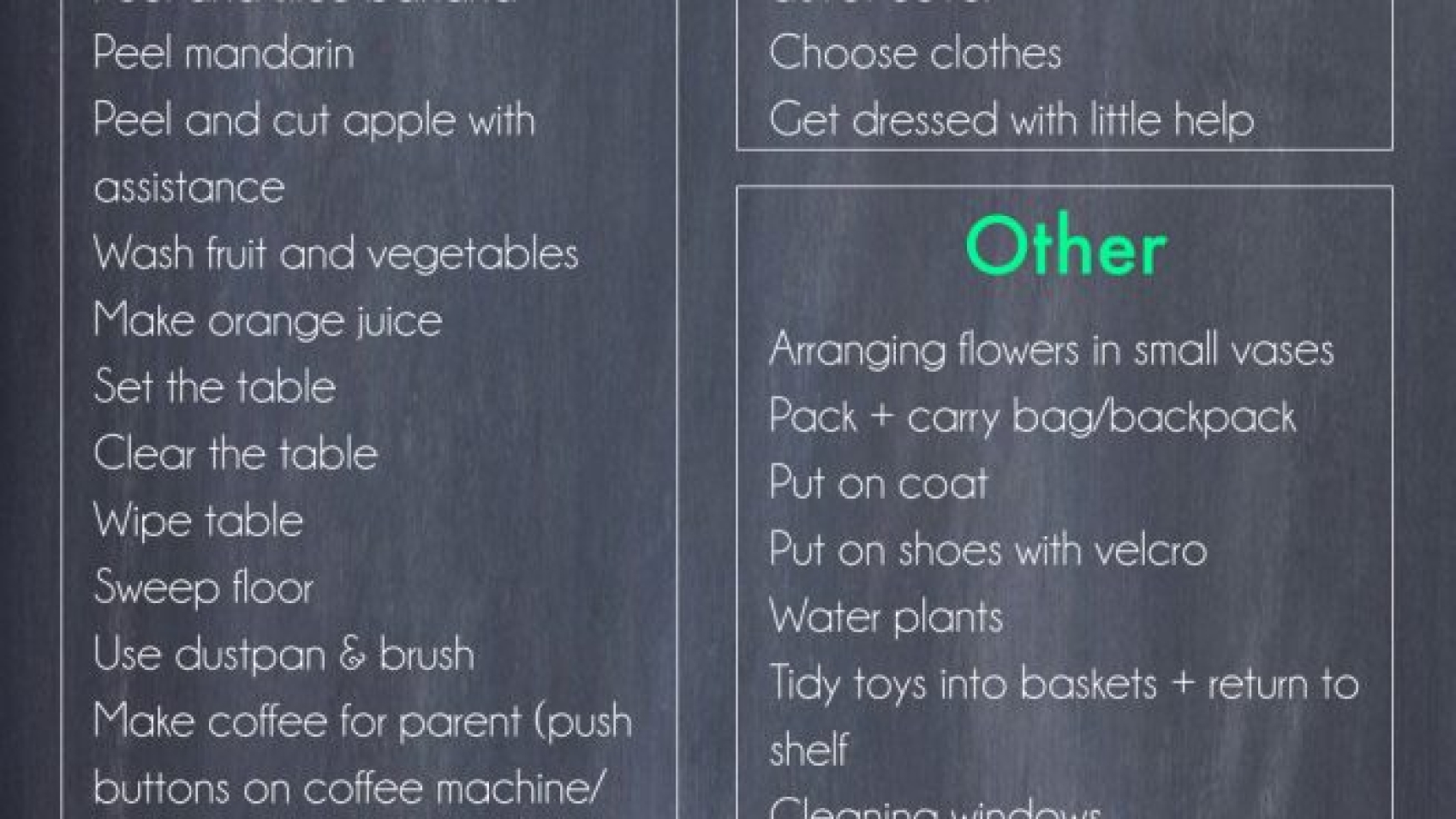
Besides keeping them occupied, now is a good time to expose children to house chores. Who knows they could be daddy’s and mummy’s little helper? 😆😆

 Chores teach children about life skills. Parents are equipping children to be independent by allowing and assisting them to complete simple task according to their age and capability.

 Chores help with family bonding. Now is a good time to bond with your child as parents don’t have to be pressured by time. Special moments could be created even by making the beds together when they are awake.

 Chores boost self-esteem. Little ones will feel important and proud when they know they have accomplished a task.

 Here are some ideas that you could try with your children.